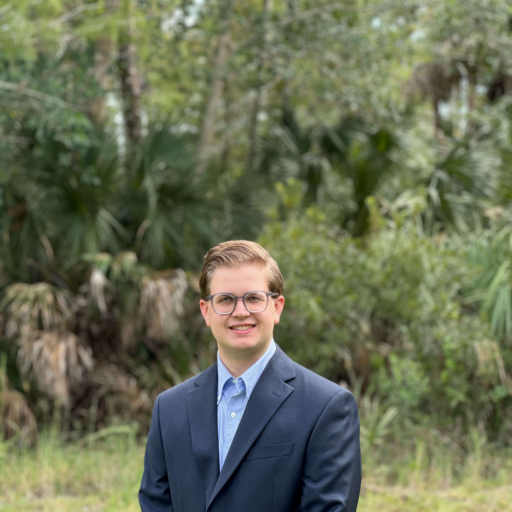
"I grew up in Livingston, NJ, about 30 minutes west of New York City. I was a naturally curious kid who always wanted to figure out how things worked. In first grade I was introduced to computers in our school's computer lab, a room full of Mac desktops, and I was immediately hooked. I knew then that I wanted to go as deep into technology as I could. I recently found my elementary school yearbook quote, where I said I wanted to grow up to be (not joking) the CEO of a tech company.",
"I started coding around the age of 7, right about when Codecademy was founded. The first language I learned was JavaScript, which is still one of my favorites, although these days I mostly write TypeScript. I quickly picked up HTML and CSS alongside it to complete the web development trio. I still remember the first time I realized I could take an input and dynamically create output text in a JS alert. I was in awe, and I kept looking for more to learn.",
"Technology wasn't my only interest. I started collecting tools for a woodworking shop in our basement, beginning small with a scroll saw and a few sanders, then working up to a bandsaw, a miter saw, and eventually a table saw. That's where I learned about tooling and manufacturing processes. Around the same time, one of the biggest shifts in manufacturing was happening: 3D printing.",
"My first 3D printer was the Anet A8, a cheap clone of the Prusa i3 that came out around 2016. I had to see what the technology was about. A clone that cheap had endless problems, but I loved working on it. Designing new parts for the machine and squeezing every ounce of performance out of it was a process I truly enjoyed. I also bought a CO2 laser engraver, which doubled as a laser cutter for thin enough material. With all of these tools, the question became what to build. I made wooden coasters, picture frames, and hanging artwork, plus hundreds of 3D prints. I even ran a semi-successful business selling 3D printed fidget spinners in middle school, and I learned CAD to improve parts on my printer. At Maker Faire 2018 I got to meet Josef Prusa himself, which promptly led me to buy a Prusa i3 MK3. I still love it and use it to this day.",
"That's how Disolv Energy was born, with the goal of making dense consumer battery cells that biodegrade after use. We wanted to end the days of Duracell batteries sitting at the bottom of landfills with toxic chemicals seeping into the soil. We assembled a team, worked on our pitch for months, and made our way to NYC Demo Day, the first round of the competition. We faced great competitors from well-known high schools, but our presentation, idea, and composure were enough to carry Disolv into the next round. We were on our way to MIT.",
"After rounds of successful presentations, including our pitch at MIT, we realized we might actually be onto something. Disolv incorporated as a business and went looking for advisors. Once we found people to help with chemistry and theory, we built a small lab, which eventually took over my woodworking shop in the basement. Disolv kept entering pitch competitions and winning them, including the Young Tycoons Business Challenge, which we won against over 7,000 teams globally. We ran dozens of trials and experiments trying to produce a solid-state, biodegradable electrolyte. Two years after inception, Disolv produced a solid-state cell made entirely of biodegradable components. We kept refining the electrolyte, filed a utility patent, met with small and large battery companies, and ran more experiments. Eventually Disolv wound down as each member of the team left for college and other ventures.",
"I picked up an HP DL580 G7 loaded with drives, CPUs, and even RAM, which is unheard of these days. I quickly became enthralled with having machines running 24/7 and doing whatever I asked of them. I added several more Dell and HP servers, some switching equipment, and a rack. When I realized my residential power wasn't consistent enough for 24/7 servers, I bought a UPS. Finally, I couldn't pass up a NetApp disk shelf, which completed a collection that would never get bigger. Every server ran Proxmox with several VMs and Docker containers, and they were all joined in a cluster. I picked up Linux quickly, since I needed it to host anything. My love for homelabs was born.",
"I still run a homelab, just on a much smaller scale. Four or five enterprise servers is a bit much for the living room of an apartment, and trust me, I tried. Now it's a small box in the corner of my living room, still running Proxmox and plenty of Docker containers. I self-host a cloud, services for project development, helpful microservices like file converters, and even this website.",
"Before college, I tried to get into venture capital by joining an angel investment firm. I eventually realized I could get licensed to facilitate private securities transactions, mainly in the pre-IPO secondary market, which is growing rapidly. I co-founded Okami Capital for that mission. It started as a boutique for private placements, with my FINRA licenses held at an associated broker-dealer. Today Okami primarily helps raise capital for its own funds.",
"When I was accepted to Florida Gulf Coast University for software engineering, I gained a new appreciation for academia. I realized university could be far more interesting, and more fun, than high school. I enrolled in calculus, physics, discrete mathematics, and engineering courses. I was also accepted into the Honors College, which started a new chapter through undergraduate research.",
"I joined a passionate team of scientists and researchers working on hurricane cost analysis. My initial role was to build a web app to visualize the team's findings, but I wanted to help with as much as I could. I generated figures for papers, cleaned up datasets, and kept working on the web app in parallel. While I was on the team we published three papers. I also presented some of our research at the Florida Undergraduate Research Association's Posters at the Capitol event, held in the Florida Capitol building in Tallahassee. There I presented new findings that challenged earlier research concluding that storm surge caused the most deaths of any category. Over the storms we analyzed, we found the opposite: rainfall caused more deaths.",
"For my first board I wanted something relatively simple, so I chose a word clock, which tells the time by lighting up an LED panel behind a facade of words. I had seen this type of clock before, but I wanted to redesign it from the components I had on hand, including LED matrix panels I could drive directly from an Arduino. After writing a simple test program to light up the matrix, I designed the rest in CAD. Then came the PCB. The board was also simple: the MCU, a real-time clock and battery, power pins, and a pin header for the matrix display. I sent the board files off to be manufactured and ended up with my very first PCB.",
"Unfortunately, after digging through the ATmega datasheet, I found that I had crossed two pins on the UART programming header, which left me with a board that was essentially dead on arrival. Still, I was satisfied with the effort, and I realized I could take these designs to the next step.",
"One of my hobbies is astrophotography, particularly deep-space targets like nebulae. My imaging setup is fairly complex: a primary telescope with its imaging train (filters, field flatteners, and an imaging camera), a secondary guide scope and camera, a motorized tracking mount, an electronic autofocuser, and dew heaters. All of it has to connect to power, my computer, or both, so the cabling and setup are quite intense, and cable snags are common.",
"That inspired my next project, an astrophotography management PCB: a central hub to connect all of my imaging devices to my computer and a power source. This single board provides power, USB passthrough, and control for everything connected to it. A commercial product like this exists and inspired me, but I wanted to build a cheaper version and, just as much, to learn more about PCB design and development. The board uses an STM32 microcontroller as the central control unit, a USB hub IC with five USB ports, dew heater outputs with control knobs, and a DC barrel jack output. The power outputs can be switched on and off from a connected computer, which can also control the dew heater output.",
"One of the last courses I took at FGCU was Computer Organization and Assembly Language. The second half of the course focused on writing register-level AVR assembly for the ATmega328, the same MCU the Arduino uses. It culminated in a final project, where my team decided to build a hardware version of the video game Keep Talking and Nobody Explodes. In the game, one player interacts with a fictitious bomb while another reads the defusal manual, so it's all about communication. We wanted to keep the puzzle aspects of the game, including the manual, but bring it to life in hardware.",
"Our implementation had three modules: an RGB LED, a set of four wires, and a Morse code generator. The player with the device describes what they see to the person reading the manual, who can't see it, and follows their precise instructions. The Arduino Uno didn't have enough pins to control everything we needed, so we used shift registers. In the end the program was over 2,000 lines of assembly, including game state, randomization logic, lookup tables, timers, and a 4-digit 7-segment display driver.",
"In mid-2026 I was accepted into the computer engineering program at the Georgia Institute of Technology, an opportunity I couldn't pass up. Most of what I'd built was software. I'd only explored hardware on my own, with PCs, printers, a couple of PCBs, and an assembly project, and I found myself more and more interested in it as I got older. At Tech I'm taking the courses for a computer engineering degree with threads in computer hardware & emerging architecture and in signals & information processing. I've also joined SiliconJackets and the Nanotechnology and Photonics Society to learn more about chip design and silicon development alongside my classes. With the credits that transferred, I'm looking forward to graduating in the latter half of 2028. Go Yellow Jackets!",
Blocking a user prevents them from interacting with repositories, such as opening or commenting on pull requests or issues. Learn more about blocking a user.